Jeff Cardenas built a humanoid robot company in an Austin industrial park. Now it's worth $5 billion.
The Apptronik co-founder spun a UT robotics lab project into one of the most-watched hardware companies in Texas, but says he isn't ready to declare victory.
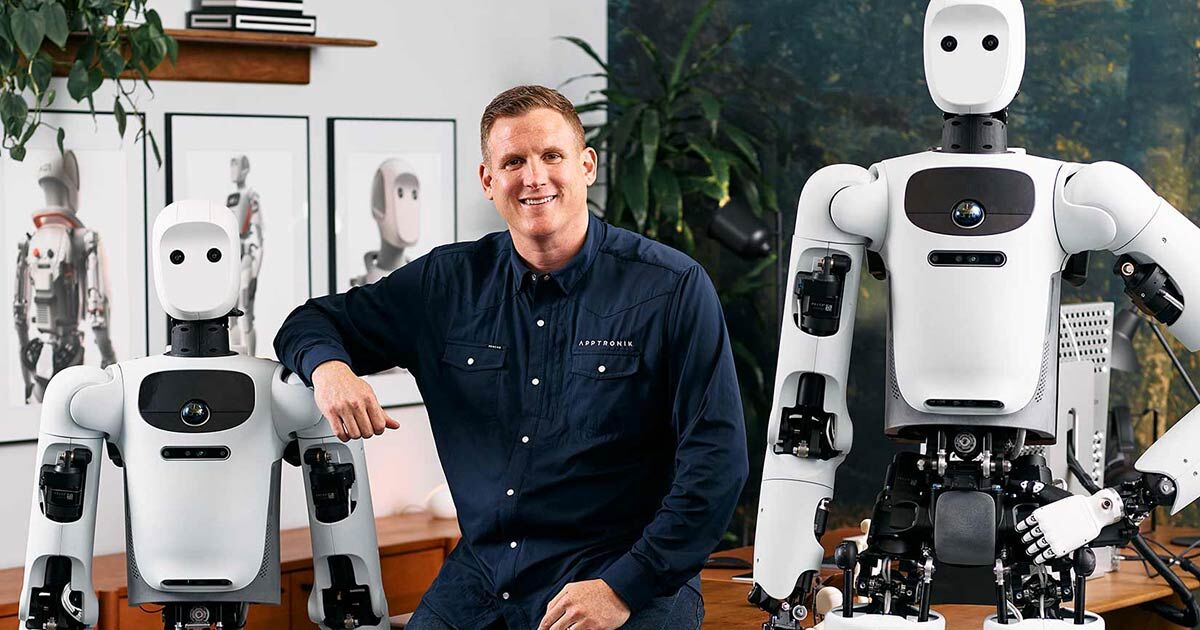
AUSTIN — When a humanoid robot ambled past Jeff Cardenas during a recent walk through Apptronik's headquarters, it had what a visiting Bloomberg reporter described as a conspicuous swing to its hips. Cardenas, the company's co-founder and chief executive, watched it pass and remarked that it was 'kind of strutting.' The moment captured the strange new normal at the Austin company: bipedal machines, once the stuff of science fiction, now wander the floor of an industrial park on the edge of town.
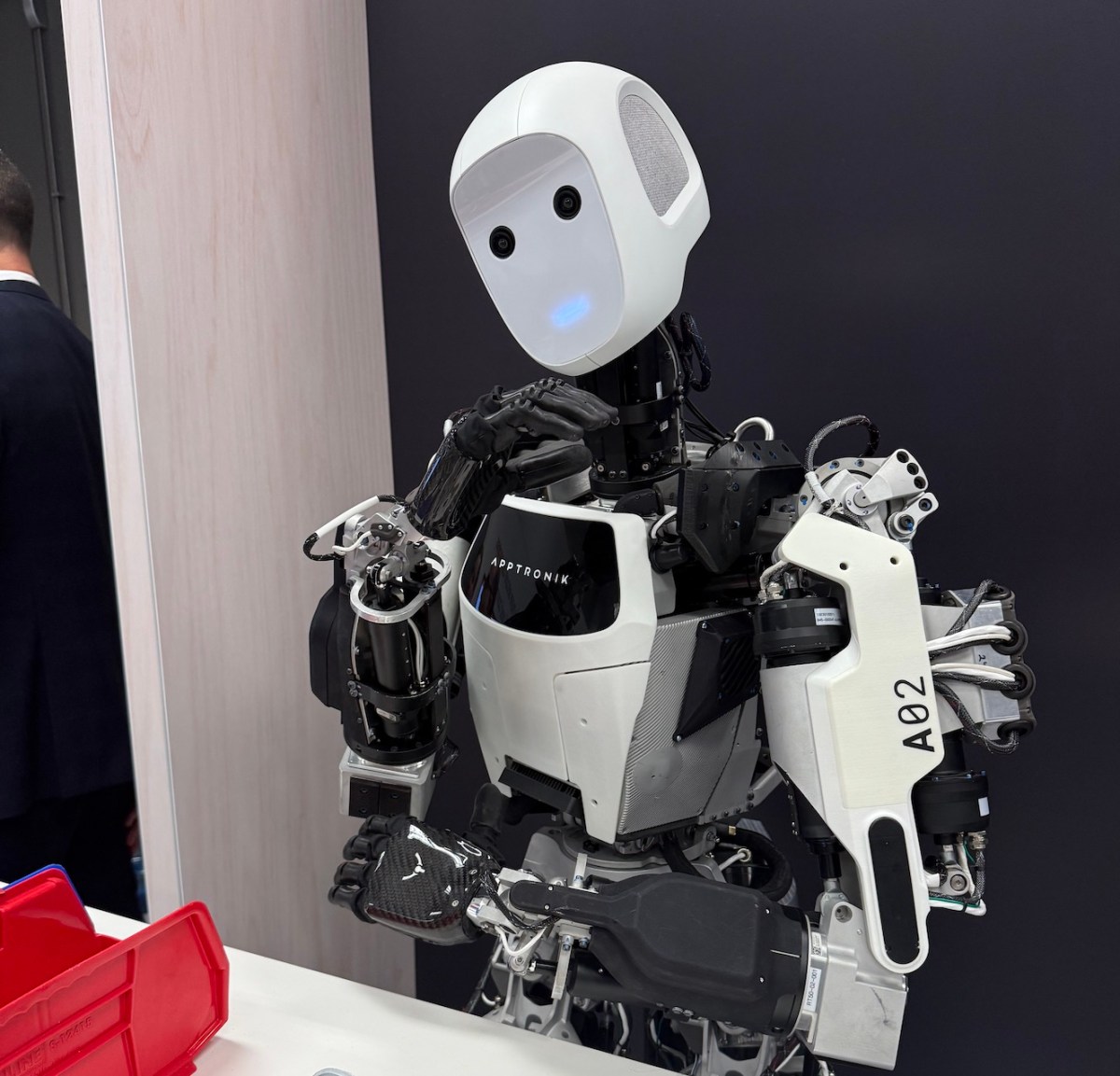
Cardenas and his partners spun Apptronik out of the University of Texas Human Centered Robotics Laboratory in 2016. The company's flagship product, a roughly 5-foot-8, 160-pound humanoid named Apollo, evolved in part from work the team did with NASA. In February 2026, Apptronik raised $520 million at a $5 billion valuation, capital aimed at moving Apollo from demonstration to genuine commercial deployment on factory and warehouse floors.
What separates Cardenas from some of his louder competitors is a reluctance to oversell. The race to ship a useful humanoid has been called the space race of our time, and the field is crowded with bold timelines. Cardenas has been notably measured about how far the technology actually is from doing real, repeatable work.
Why it matters
Apptronik is the anchor of Austin's claim to be America's robotics capital outside Silicon Valley, a cluster that now includes construction-robotics firm Infravision and a string of physical-automation startups. A homegrown company reaching a $5 billion valuation while keeping its engineering and manufacturing in Central Texas is exactly the kind of deep-tech story Austin has chased for a decade. It also signals where local engineering talent is heading: away from pure software and toward machines that move in the physical world.
The company's partnership with Google DeepMind's robotics team pairs frontier AI models with Apptronik's hardware, a bet that the missing piece for humanoids is not legs or hands but a brain capable of generalizing across messy real-world tasks. For Austin, the question is whether Apollo becomes a product or stays a very expensive demonstration.
It's kind of strutting.— Jeff Cardenas, Co-founder and CEO, Apptronik
Reported by Next in Austin. Based on reporting from Bloomberg Businessweek.